Using a One Health Lens to Improve Human Health
A recent scientific paper
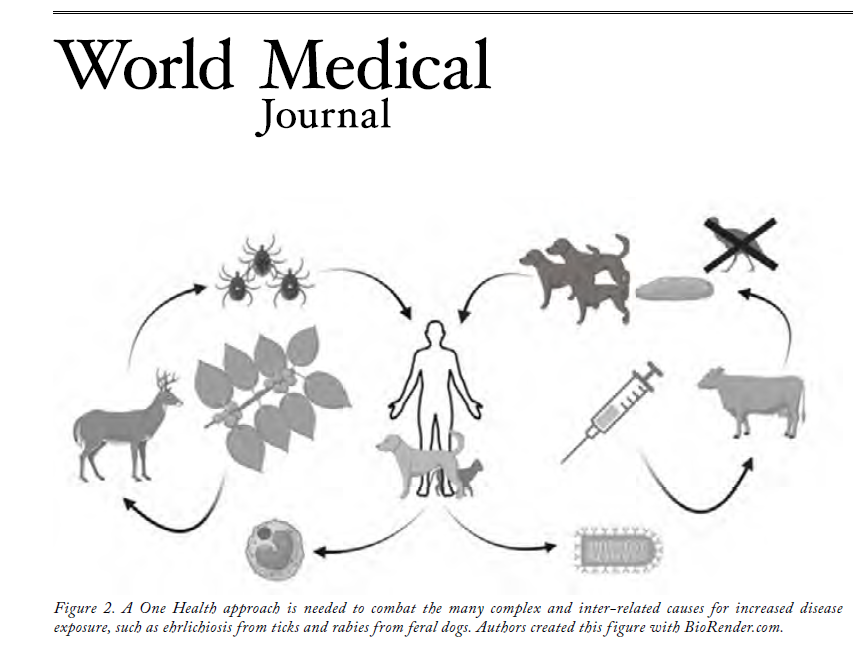
With the publication of our paper, Overcoming the blind spot: A One Health vision to enhance human medicine, we hope our words of real life examples help assure human health care practitioners that using the One Health approach is imperative for achieving optimal health outcomes for their patients. Only by taking a more holistic view of the interconnections that bind the health of all life—non-human and human animals and the biotic environment—will we strengthen understanding of the shared threats that challenge health across taxa. This inclusive view also informs what preventive and therapeutic measures we must take to advance healthy humans, animals, and environments.
I have thought about One Health for many decades
In the 1990s when I was in the first weeks of my 3-year residency in zoo and wildlife medicine at the University of Florida, I was wheeling my anesthetized patient into the OR (operating room). A small animal medical resident approached me and asked, “What patient did I have on my gurney and what surgery was I planning to perform?” “I have a 2-year old ferret and I am heading in to perform an adrenalectomy,” I replied. A who for a what was in her eyes, but all she said was “ferrets have adrenal glands?” This one encounter all those years ago propelled me into working to break down silos between health professionals and to connect disciplines to advance One Health.
Operationalizing the One Health approach
You can imagine how difficult this task may sometimes feel with our professional lives often siloed into individual specialties, and the unique thought processes and languages that we may hold within each of these specialties. The above ferret story was of a conversation between two veterinarians from different specialties. What of the relationship between human medical doctors and doctors of veterinary medicine, and our understanding of each other’s professions? By taking a transdisciplinary approach to the health challenges of today, and learning to speak across specialties and educate one another on diseases that impact our patients, we will be able to implement measures to ensure better health care of all our patients.
So, whether you are a health care practitioner for humans, animals, and/or environments or simply a person that wants to be healthy (or both of these!), take a few minutes to read our article and consider ways that you may help advance human health while also helping to ensure a healthy planet.
Extra
If you are wondering, ferrets do have adrenal glands, and yes veterinarians do perform adrenalectomies (removal of pathologic adrenal glands) for therapeutic reasons on this species and many others.